Craft founder Dan Crowder on why the strongest in-house creative teams aren’t replacing permanent employees with freelancers – they’re building more resilient teams by knowing when to use both.

For a long time, building an in-house creative team meant growing a permanent headcount. Today though, the best in-house teams are thinking differently, working more flexibly for greater creative gain.
If you were to grow your garden entirely with evergreens, it would be dependable but it would also be fairly predictable. The most interesting gardens mix long-term planting with seasonal additions that bring new colour, fresh perspectives and the flexibility to evolve over time.
Creative teams aren’t so different.
In-house teams that use freelancers don’t value permanent employees any less. The fact is that creative demand has become less predictable, with campaigns moving faster and specialist skills changing constantly. Not only that, but getting approval for new permanent hires has never been more complex.
That’s why smart in-house leaders are now using freelance as a deliberate workforce planning tool.
Interim Isn’t Just for Busy Periods Anymore
Looking back to old perceptions of what a freelancer can do for a business, your mind goes to holiday cover, maternity cover, or just having someone to help when everyone’s overloaded.
The new reality is that interim experts can be engaged to unlock new capabilities or give you access to specialist skills that you just don’t need in-house for every project. They can also help you scale quickly and support changing business priorities.
At the end of the day, marketing teams care that campaigns land on time and are of a high standard. In a bid to keep up, creative services teams are constantly asking: “How are we actually going to resource this?”
Freelance has become the answer to that question more often than ever.
Permanent Teams Create Stability. Freelance Creates Flexibility.
When talking about using interim workers as part of your in-house agency, there’s a really important nuance. You can’t position it as ‘permanent vs freelance’, because they both serve totally different purposes.
Permanent teams provide culture, continuity and institutional knowledge, while freelance provides agility and specialist capability.
Not every business challenge needs another permanent employee. Sometimes it needs specialist expertise for six weeks.
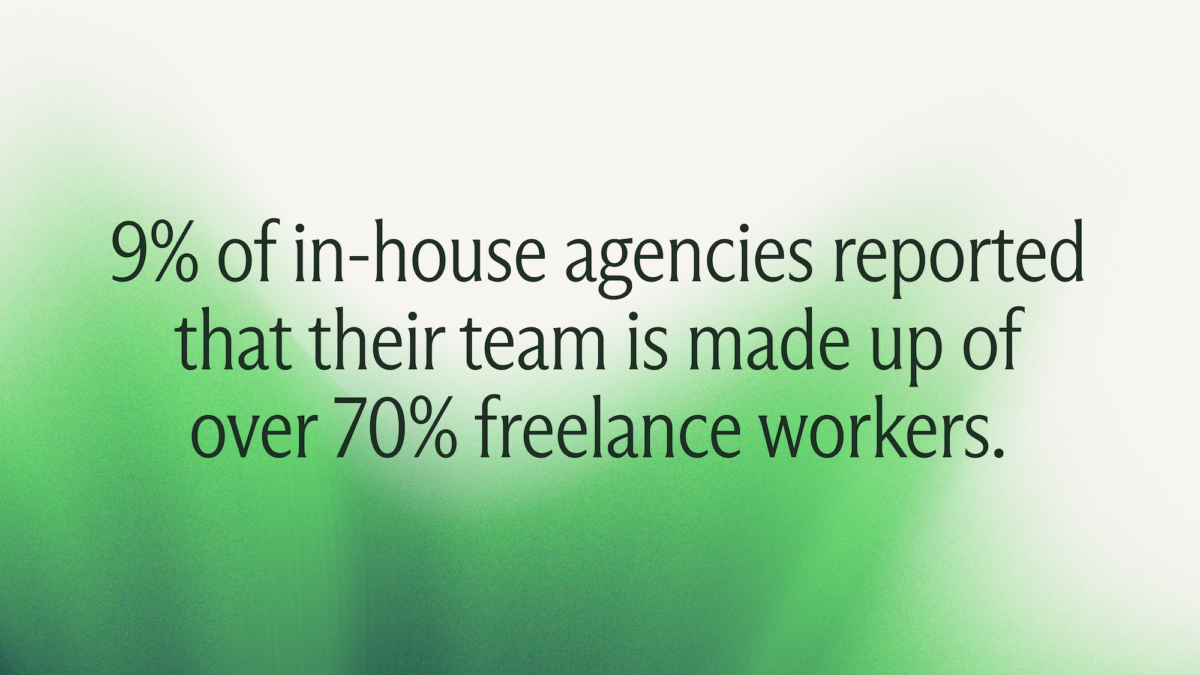
In-house agencies are embracing this hybrid workforce model. IHALC’s “In-House Agency Benchmarking Survey 2025” highlights an interesting balance:
Today’s Freelancers Are Much More Embedded
More often than not these days, freelancers aren’t just dropping into a project for a few days.
They’re booked for months and sent company equipment to work on. They have to complete legal onboarding, join Slack channels, and attend team-wide meetings.
They’re much closer to contractors than the “stereotypical” agency freelancer who appears for three days and disappears again.
We think this is a response to the question of how you balance rigour with speed, because you still need proper onboarding and vetting, but without losing the flexibility freelance offers.
Why Big Businesses Need Flexible Capacity
Headcount isn’t always a good move for large corporate entities. Permanent hires are long-term commitments that require sign-off from HR, Finance and Legal.
Large organisations are already under pressure to keep permanent headcount under control, and so freelance gives businesses a way to respond to needs without adding long-term organisational risk.
New employment laws and greater employee protection are steps in the right direction, but it’s had a knock on effect on hiring. Organisations are becoming more deliberate about when they hire permanently and more selective about who they bring in.
That doesn’t mean they’re hiring less – it means they’re hiring differently, which is where strategic interim hiring comes in.
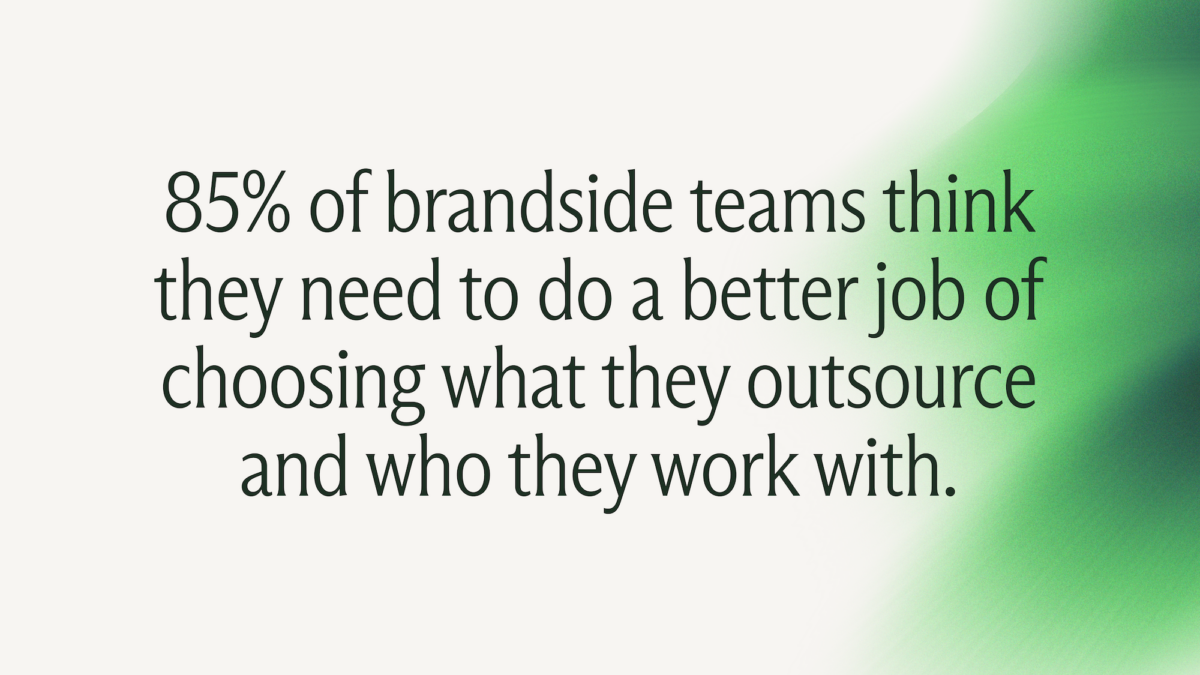
Superside’s “Overcommitted: The State of In-house Creative Teams in 2025” reports that:
Speed Doesn’t Mean Lower Standards
If today’s freelancers are more embedded and expected to do more than simply cover absences, they still need a robust interview process.
The stakes are slightly different than a permanent hire, because instead of asking: “Where do you see yourself in five years?,” businesses are asking: “Can this person help us deliver this work well?”
You can and should still screen carefully and make sure you onboard people properly, but you’re not trying to predict someone’s contribution over the next decade or determine how they will shape your business.
That being said, sometimes the best way to understand whether a freelancer fits your business is simply to work with them and see them operate in a real team, which you can do before committing to the long term.
Strong Roots. Flexible Growth.
Strong in-house teams don’t just swap out permanent employees for freelancers to keep overheads low. They focus on building teams with the flexibility to respond to whatever comes next.
Just as the most interesting gardens aren’t made up of one type of plant, the healthiest creative teams aren’t built around one type of hire. Permanent employees provide the structure, continuity and deep knowledge that organisations rely on. Freelancers bring fresh perspectives, specialist expertise and the flexibility to evolve as priorities change.
From where we’re sitting, the smartest workforce strategy isn’t choosing one over the other, but creating the right environment for both to thrive.